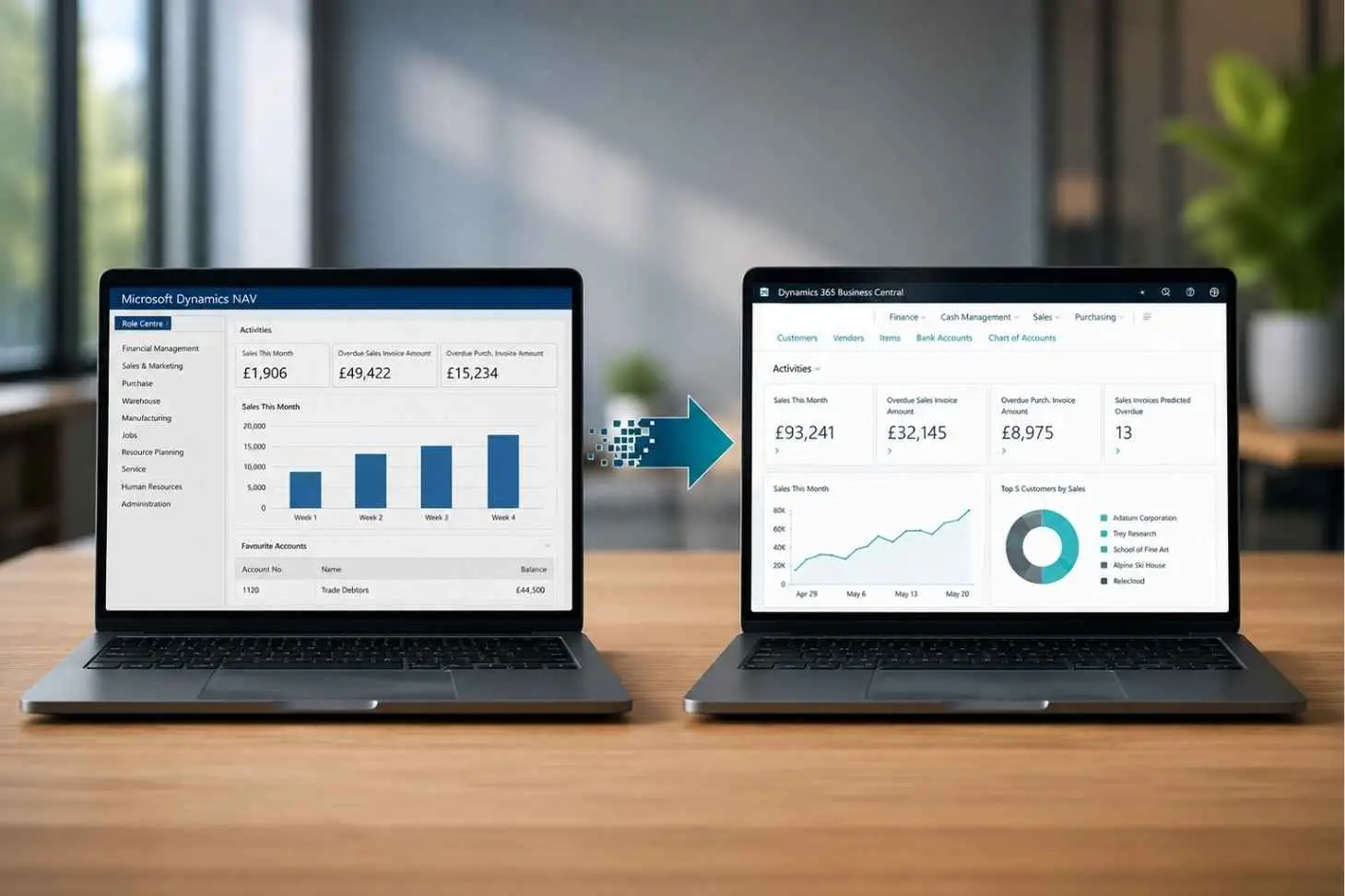
Across the UK,
manufacturing is undergoing a quiet transformation.
Margins are tighter, customer expectations are higher, and every decision is expected to be backed by data. Yet for many firms, the humble spreadsheet still sits at the heart of production planning, stock control and reporting.
And it’s easy to understand why.
Spreadsheets are familiar, flexible and free… or at least they appear to be. But behind the comfort of a well-worn Excel file lies a costly reality: hidden inefficiencies, duplicated effort and
disconnected data that make it impossible to see the full picture.
For a sector built on precision and timing, relying on manual data entry and outdated files isn’t just inefficient… it’s risky.
Modern manufacturing demands more than static sheets and siloed systems. It needs connected tools, real-time insight and the confidence to act on accurate information.
That’s where the next generation of
manufacturing ERP comes in.
Why Spreadsheets Still Feel Safe
For many manufacturers, spreadsheets have been part of daily operations for decades.
They’re the quiet constant that underpins production schedules, stock counts and delivery tracking. Everyone knows how to use them and they’re cheap, flexible, and above all else, easy to adapt on the fly.
It’s that sense of familiarity that makes them feel like a low-risk, dependable option.
But it’s an illusion of control… one that hides inefficiency and prevents genuine progress.
In reality, what feels
safe often holds organisations back from making the shift to integrated, data-driven tools like
Microsoft Dynamics 365 Business Central and the wider
Microsoft Tech Stack.
Spreadsheets might have helped UK manufacturers survive the last decade, but they won’t help them thrive in the next.
Familiar Tools, Familiar Risks
Now don’t get me wrong. I’m not against spreadsheets. They became the default for a reason.
They’re quick to set up and easy to customise, which makes them ideal for managing the complexity of supply chains, order tracking and production planning…at least at first. But over time, that convenience turns into a dependency.
Many production teams still operate from individual Excel files or shared drives, with each department maintaining its own version of “
the truth”.
It’s not unusual for finance, procurement and operations to be working from different numbers, simply because data has been entered or updated at different times.
Those legacy habits are then reinforced by limited IT budgets and a desire to “
make do” with what’s already in place.
The result is a fragile data ecosystem… one missed formula, one accidental overwrite and an entire day’s planning can unravel.
As manufacturers grow, those small cracks widen.
What used to be manageable on a local spreadsheet becomes impossible to control across multiple plants, suppliers and shifts.
It’s not a lack of effort holding teams back, but a lack of integrated systems.
The Hidden Cost Of Manual Efficiency
On paper, spreadsheets look efficient.
They’re fast, flexible and cost nothing to maintain. But that sense of efficiency disappears when you start counting the hours spent reconciling figures, fixing formula errors or copying data between tabs. Every manual step adds friction, and that friction compounds quickly in environments where timing and accuracy matter most.
In production, even a small delay, an incorrect stock count, a missed materials update… will ripple across the entire supply chain.
These aren’t rare occurrences; they’re part of the daily rhythm of spreadsheet-based operations. When every calculation and decision depends on manual input, mistakes become inevitable, and those mistakes cost real money.
What’s more, spreadsheets operate in isolation.
They don’t talk to your ERP systems, IoT data feeds or the
Power Platform apps that could automate repetitive tasks. That means valuable insight is trapped, forecasts are less accurate, performance metrics are out of date and leadership can’t see issues until they’ve already happened.
It’s not inefficiency that’s hurting productivity; its invisible inefficiency hidden behind the myth of “
manual control”.
When ‘Good Enough’ Becomes The Ceiling
At a certain point, “
good enough” becomes your barrier to progress.
Many manufacturers don’t realise how much potential they’re leaving on the table because their systems simply can’t show it. Spreadsheets make it difficult to identify production trends, energy usage patterns or process inefficiencies… the very insights needed to drive leaner, smarter operations.
Without connected data, there’s no real visibility across departments. A planner might know output targets, but not the current machine downtime; procurement might see inventory levels but not shifting demand. That disconnection limits agility, and agility is what defines competitiveness in modern manufacturing.
Modern tools like Business Central, supported by
Power BI and
Microsoft Fabric, turn that ceiling into a platform. They connect production data, financial performance and supplier metrics in real time, giving leaders a single view of truth.
The move away from spreadsheets isn’t about abandoning a familiar tool… it’s about unlocking the data you already have, safely and strategically.
Counting The Cost Of Spreadsheet Dependency
Spreadsheets always seem harmless until you actually start measuring what they’re really costing you.
Every manual update, formula fix or duplicated file chips away at productivity and profit.
In manufacturing, where margins are often thin and timing is everything, those small inefficiencies quickly turn into lost hours, wasted materials, and missed opportunities.
Errors That Escalate Fast
Manufacturing thrives on precision, but spreadsheets leave far too much room for human error.
One mistyped formula or misplaced decimal can derail an entire production run or throw purchasing forecasts off for weeks. When teams rely on disconnected Excel files, there’s no
single source of truth… and mistakes spread fast.
A single incorrect cell might not sound like much, but in a high-volume environment it snowballs into costly downtime, compliance breaches or delayed deliveries.
By contrast, modern ERP systems such as D365 Business Central validate data automatically and share it instantly across departments.
That’s how manufacturers reduce errors before they reach the shop floor and protect their margins in the process.
Missed Opportunities For Insight
Spreadsheets record data; they don’t reveal it.
That means every figure sits in isolation, whilst planners and managers have to piece trends together manually. Valuable insights into demand patterns, machine performance or energy usage often stay hidden in
silos because there’s no way to join the dots.
A connected ERP and analytics ecosystem, spanning Business Central, Power BI and Fabric, changes that.
When sales forecasts, production schedules and inventory data flow together in real time, trends become visible, and decisions become proactive instead of reactive. The shift isn’t just technical though; it’s strategic.
It turns scattered data into continuous intelligence.
Slower Decisions, Weaker Margins
Manufacturers might want to (need to) move fast, but spreadsheets will slow everything down.
Teams waste time searching for the latest version, reconciling numbers between departments or emailing updates that are out of date before they’re opened. By the time a report reaches leadership, it’s already historical.
Real-time decision-making isn’t possible when every calculation depends on manual updates. That’s why forward-thinking firms are automating routine reporting through the Power Platform, linking it directly to ERP and production data. The result is a live view of performance, stock and costs… allowing leaders to act in the moment, not after the fact.
Modern Manufacturing Runs On Integration, Not Isolation
Manufacturing no longer happens in silos (thankfully).
Every decision, from procurement to production to delivery, depends on shared data and connected systems. Yet many UK manufacturers still operate on fragmented processes stitched together by spreadsheets and emails.
That patchwork approach just isn’t good enough anymore as it limits visibility, slows response times and makes every improvement harder than it needs to be.
The most competitive manufacturers don’t just digitise though; they integrate.
They connect their finance, operations, and supply chain into a single, data-driven environment. With tools like D365 Business Central,
Supply Chain Management and Fabric, that level of integration is finally achievable without the complexity or cost of legacy ERP systems.
Why ERP Changes The Game
It’s true, time was, ERP was a massive investment.
It demanded months of downtime, expensive consultants and endless configuration. But thankfully, those days are gone. Modern cloud ERP solutions such as D365 Business Central scale with your business, adapting as your needs evolve. They centralise data so every department, from the shop floor to the boardroom, works from the same, accurate information.
Instead of spreadsheets scattered across teams, manufacturers gain one connected system that tracks materials, costs and production in real time.
That transparency enables faster scheduling, stronger quality control and data-led forecasting.
In short, ERP doesn’t just record what’s happened… it helps you plan what happens next.
The Microsoft Tech Stack Advantage
Microsoft’s manufacturing ecosystem does so much more than replace spreadsheets though; it transforms how data moves across your organisation.
Dynamics 365 manages core operations, Power BI visualises performance,
Power Automate handles repetitive tasks, and Fabric unifies everything into a single data layer.
Together, they create an intelligent manufacturing environment in which information flows automatically. Machine data, financials and customer insights feed into one connected system. That means fewer manual updates, faster reporting and better decisions… all within a platform your teams already understand and trust.
From Reactive To Predictive
Spreadsheets will only ever describe the past.
Integrated data platforms on the other hand, anticipate the future. When production systems connect through Business Central and Fabric, manufacturers can track trends, predict bottlenecks and forecast demand before it spikes.
Predictive maintenance, AI-driven scheduling, and real-time analytics aren’t just buzzwords… they’re now standard capabilities in the Microsoft Tech Stack. They give manufacturers the insight to prevent issues before they occur, optimise energy usage, and increase uptime without guesswork.
That shift from reactive firefighting to proactive optimisation is what’s defining the next era of UK manufacturing.
Building A Smarter Manufacturing Ecosystem
Don’t think modernisation automatically means disruption either.
Manufacturers that succeed with digital transformation don’t rip and replace overnight; they build steadily, connecting one process at a time. The Microsoft ecosystem makes that approach realistic, letting organisations evolve without halting production or over-stretching budgets.
Start Small, Scale Fast
The most effective transformations begin with one clear problem… and one measurable fix.
A single Power App that automates quality checks, or a Business Central module that streamlines inventory control, can deliver tangible results within weeks. Once those benefits are proven, scaling becomes easier because the value is visible.
FormusPro helps manufacturers take that incremental approach to eliminate downtime.
By integrating new tools alongside existing systems, we help teams modernise without breaking what already works. Each step builds towards a unified, data-driven environment. One where insights flow freely and improvements never stop.
Empowering People, Not Replacing Them
Technology should amplify human skill, not erase it.
Moving beyond spreadsheets frees experienced operators from the grind of manual updates so they can focus on problem-solving, innovation and customer value.
With Power Automate handling repetitive data entry and
Power BI surfacing insights visually, decision-makers gain time and clarity. Training and support from partners like
FormusPro ensure teams understand the “
why” behind every new system, building confidence as well as capability.
When people trust their tools, transformation sticks.
Partnering For Progress
No manufacturer should face modernisation alone.
The right partner will bring industry understanding, technical expertise and a clear roadmap. As a Microsoft Solutions Partner for Business Applications, FormusPro connects the dots between operations, data, and strategy… designing solutions that fit the pace and pressure of real-world manufacturing.
Our role isn’t to sell software; it’s to help manufacturers unlock their data, strengthen their processes, and compete with confidence in a connected economy. That’s what turns digital investment into measurable improvement, and that’s what sustainable progress looks like.
Final Thoughts
Manufacturing has always been about precision, timing, and control, but the tools that once delivered those advantages are now the ones holding progress back.
Spreadsheets helped the industry stay organised through years of change, yet they were never designed for the complexity, scale and data demands of modern production.
The future of UK manufacturing belongs to those who connect their systems, trust their data, and empower their people to act on real-time insight. With the Microsoft Tech Stack, that future isn’t out of reach… it’s already here.
At FormusPro, we help manufacturers make that transition with confidence, combining deep sector understanding with the flexibility of Dynamics 365 Business Central. The goal isn’t just efficiency; it’s resilience, agility and a culture ready for the next era of growth.
Explore our Manufacturing and ERP solutions here >>