Digital twinning technology – Discover what digital twinning is, how it works, and why organisations are using digital twins to make smarter, safer decisions.
Technology buzzwords come and go, but digital twinning, if you can consider it a buzzword at all, isn’t going anywhere.
But what is it?
Breaking it right down, a digital twin is a virtual version of something real… whether that’s a machine, a building, a business process or even an entire organisation.
Unlike a one-off report or a static diagram, a digital twin is dynamic. It updates in real time, using data and AI to mirror the way its real-world counterpart behaves.
So why should organisations care?
Because digital twins aren’t just shiny tech experiments.
They’re practical tools that give leaders the power to test ideas before committing, reduce risk, cut costs and spot opportunities for improvement. From predicting when equipment might fail, to modelling how a fundraising campaign will perform, digital twins help turn “what if?” questions into evidence-based answers.
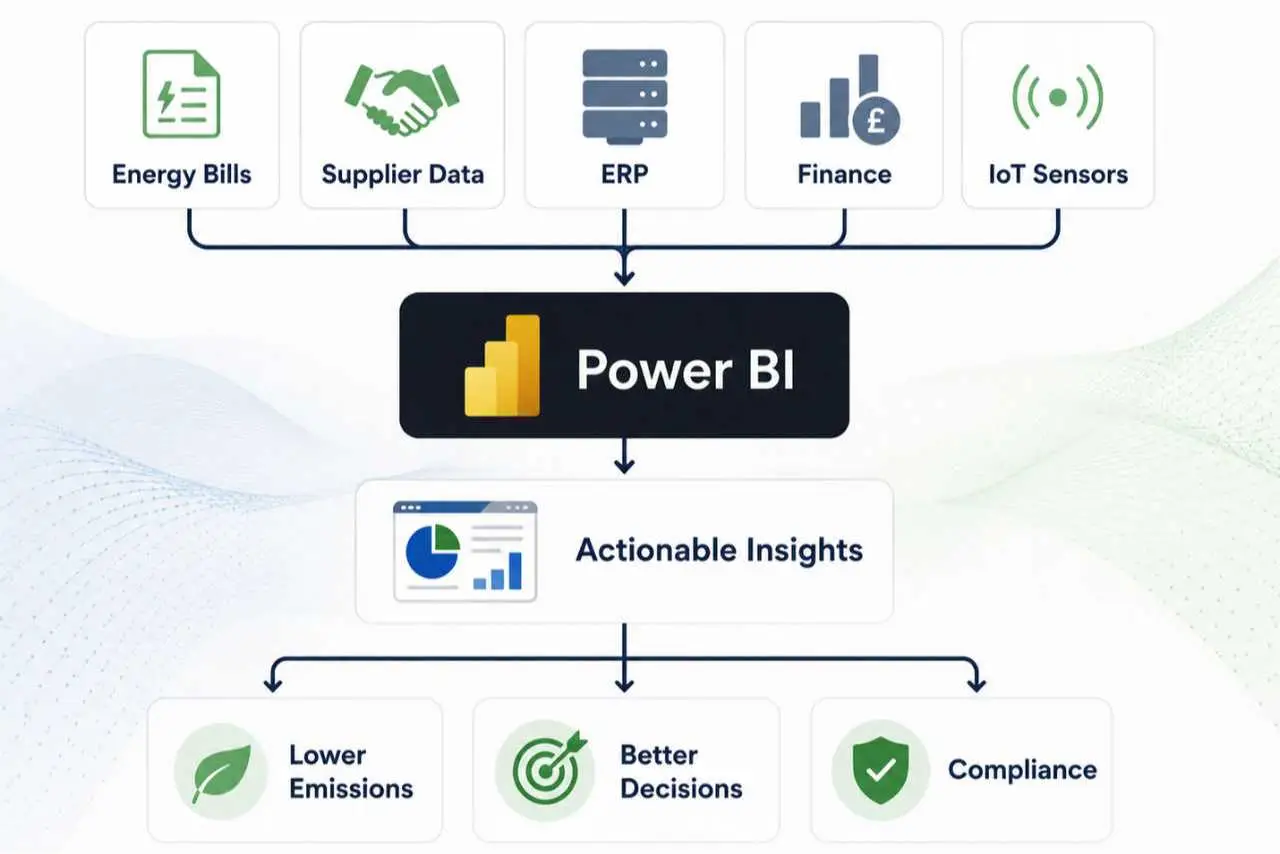
And thanks to platforms like Microsoft Azure, Dynamics 365 and the Power Platform, digital twinning isn’t limited to big manufacturers or research labs.
It’s becoming accessible for membership organisations, healthcare providers, NonProfits, local authorities and beyond.
Put simply… the benefits of digital twins are real, measurable and closer to everyday business life than many people think.
At its core, a digital twin is a virtual model of something that exists in the real world.
It could be a physical object, like a piece of machinery or something less tangible, like a customer journey, a business process or even an entire city, with all the moving parts that would entail.
The difference between a digital twin and a traditional model is that the twin isn’t static, it’s continuously updated with live data.
That means a digital twin doesn’t just show you what has happened in the past.
It also helps you understand what’s happening right now and what’s likely to happen next.
That’s why the most accurate digital twin definition isn’t just “a copy”… it’s a smart, evolving simulation that mirrors reality and helps leaders make better choices.
Whether it’s called digital twinning or digital twin technology, the principle is the same: create a living digital environment where organisations can explore scenarios, test strategies and learn without the risks or costs of experimenting in the real world.
Think of a digital twin model like a flight simulator for business.
A flight simulator doesn’t just look like an aircraft cockpit… it reacts the way a real plane would when you press buttons, adjust controls or fly into turbulence.
In the same way, a digital twin isn’t just a picture of your system or process; it responds to real-time data and lets you try out changes before they’re rolled out in reality.
That’s what makes a digital twin so much more powerful than a dashboard or report.
It’s a virtual replica that evolves, adapts and predicts. You can ask “what happens if we change this?” and the digital twin will show you, without disrupting operations or draining your budget.
For many leaders, the idea of a digital twin sounds like something reserved for big manufacturers, aerospace engineers or enterprise level organisations.
But in reality, the benefits of digital twins are increasingly accessible across sectors, from NonProfits to Higher Education institutions!
And the reason is simple: digital twins help organisations make better, faster and safer decisions.
They give you a space to test ideas, predict outcomes and avoid costly mistakes, all without having to take risks in the real world.
Most organisations make decisions based on a mix of experience, data and a bit of gut feeling.
A digital twin reduces that guesswork by providing a real-time simulation of your environment.
You can model “what if” scenarios before committing to a new process, campaign, or investment.
For example, a membership organisation could model how different pricing strategies might affect renewals, whilst a healthcare provider could simulate patient flows to see how a new clinic layout might cut waiting times.
By working with a digital twin model, you get insight before you take action… lowering the risk of expensive missteps.
One of the biggest advantages of digital twin technology though is in its ability to highlight waste.
By mirroring your processes digitally, you can spot where time, money or resources are being lost… and then fix it before it starts draining your budgets.
And the sustainability angle is just as important.
Organisations under pressure to meet net-zero goals can use a digital twin to test how energy-saving measures will play out in practice.
Instead of rolling out a costly initiative and hoping it works, you can model it in the twin, adjust based on the results and then launch the most effective approach.
Unlike a static report, a digital twin keeps updating.
As your organisation grows, as new data flows in and as the environment changes, the twin evolves alongside it. That makes digital twins ideal for organisations that want to move beyond “big bang” transformation projects and instead focus on continuous improvement.
It’s not about one giant leap forward… it’s about many small, evidence-based steps that add up to lasting change.
Because a digital twin is flexible by design, its applications aren’t limited to one sector.
Whether you’re running a charity campaign or planning the future of an entire city, digital twin technology can give you clarity before you act.
Almost all NonProfits operate with tight budgets and high expectations.
Every pound or dollar spent needs to deliver maximum impact. A digital twin model helps by simulating key activities such as:
By working with a virtual replica of their operations, NonProfits can try out new approaches without risking valuable time or resources.
That means more certainty, less waste, and ultimately more impact for the communities they serve.
At a city level, the potential is even bigger.
Imagine a local authority using a digital twin of their entire community, from transport networks to public services to council tax rates, to make decisions with confidence.
A city-wide digital twin would:
For the public sector, this isn’t about experimenting with people’s lives.
It’s about building a safe, digital environment where strategies can be tested and refined before they’re implemented in the real world. The result is a city or town that runs more efficiently, sustainably, and equitably.
The idea of building a digital twin can sound intimidating.
It conjures images of advanced labs, complex coding and huge budgets. In reality though, many organisations already have the tools they need within the Microsoft ecosystem.
Microsoft has been quietly laying the foundations for accessible digital twin technology through services like Azure Digital Twins, Dynamics 365 and the Power Platform.
When combined, they allow organisations to connect their data, model processes and visualise outcomes without reinventing the wheel.
The power here isn’t in a single product.
It’s in how these technologies work together, creating a living model that reflects your organisation in real time. And because they’re part of the Microsoft tech stack, they integrate with tools you’re already using every day… from Office 365 to Teams.
That means digital twinning isn’t an experimental luxury anymore.
It’s a practical, achievable strategy for organisations that want to make smarter decisions and build resilience for the future.
Digital twinning is still an emerging field, but its trajectory is clear.
As data becomes easier to capture and AI continues to mature, digital twin technology will move from a specialist tool to an everyday business asset.
By 2030/35, it’s likely that most organisations will have some form of digital twin running quietly in the background… whether it’s a city modelling its energy use, a NonProfit fine-tuning donor engagement or a manufacturer predicting machine failures before they happen.
The biggest shift won’t just be technical… It will be cultural.
Leaders will come to expect that decisions are tested in a virtual replica before they’re rolled out in the real world. The organisations that embrace this mindset now will have a clear advantage: less risk, more confidence, and a deeper understanding of their operations.
In my mind, a digital twin isn’t about technology for technology’s sake.
It’s about giving people the tools to make better decisions. Whether you’re trying to stretch limited resources, planning sustainable growth or looking to stay one step ahead, digital twinning offers a practical way to explore possibilities before committing to them.
And the best part?
With Microsoft’s ecosystem, this isn’t a distant vision. It’s achievable today.
So the real question isn’t “what is a digital twin?” anymore. It’s “what could a digital twin do for us?”

Written By:
Agentic AI Is Already Here… But Are You Ready?
This Isn’t Your Typical Blog On AI: Dozens Of Practical Tips On Using CoPilot (And ChatGPT) To Increase Fundraising
Ready For More?