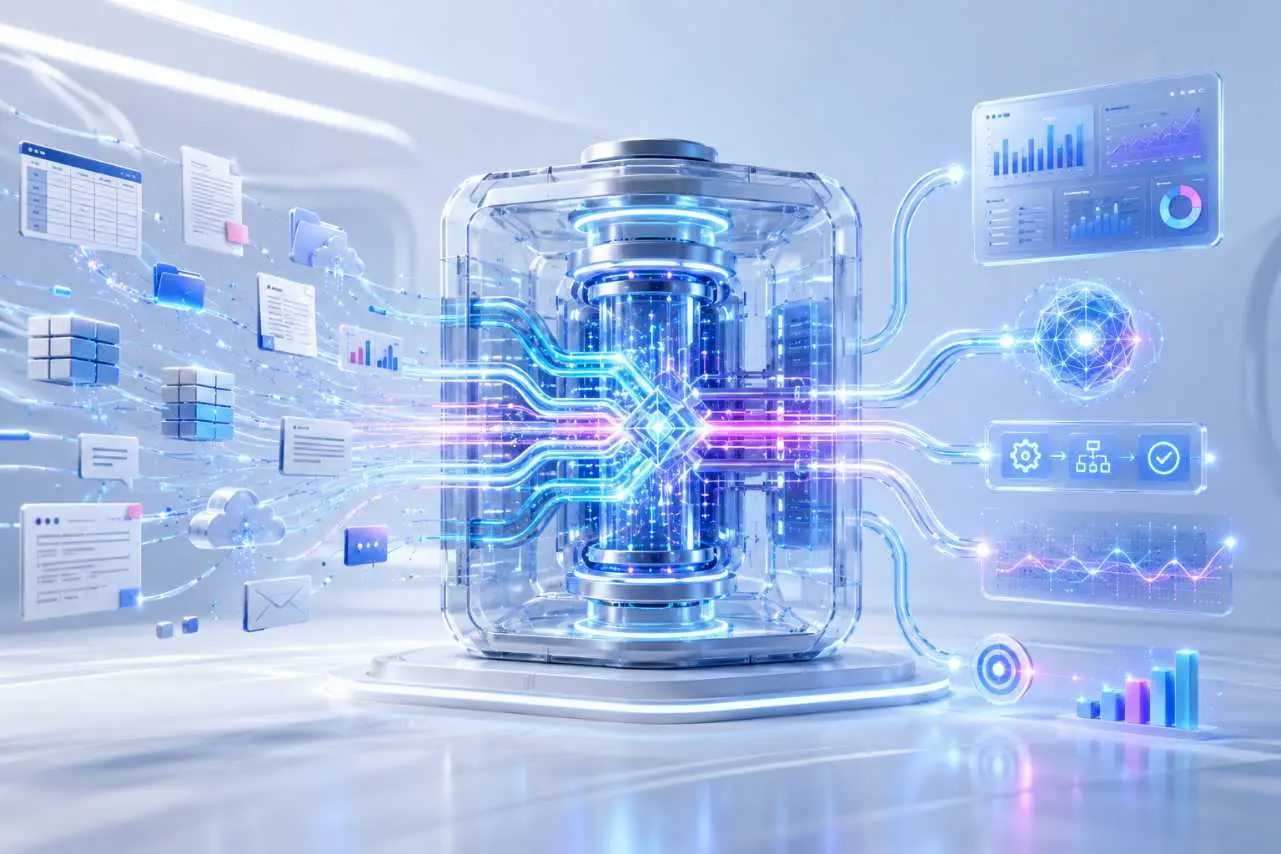
Discover what a modern ERP should do for your business. Learn the essential features, benefits, and best practices for choosing and implementing the right enterprise resource planning system.
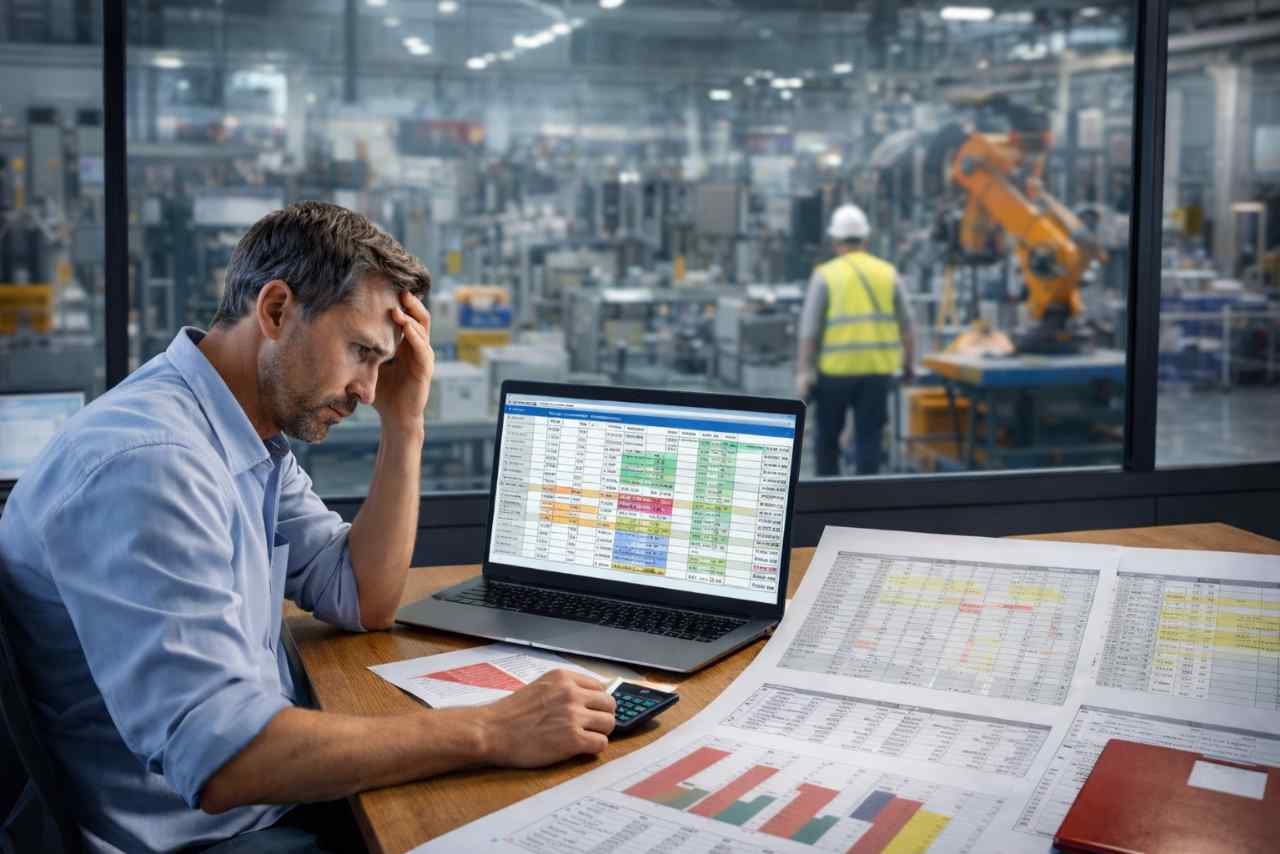
Why Spreadsheets Are Still Holding Back UK Manufacturing

Your Systems All Talk To Each Other. So Why Doesn’t HR?
Every modern organisation runs on systems. But not every system helps the business drive their bottom line.
Enterprise resource planning, or ERP, isn’t another app to bolt on. It’s the operating system for the organisation: one platform that connects finance, operations, supply chain, projects, people and data so decisions happen with confidence and speed.
A modern ERP system creates a single source of truth, automates the work that slows teams down, and scales as you grow.
If your current tools can’t do that, you don’t have ERP.
You have friction.
Before we get started though, we should probably answer the question of what ERP stands for, and what it actually is.
Enterprise Resource Planning, or ERP for short, describes software that connects your entire organisation. It brings together the systems you use for finance, supply chain, projects, HR, customer management and reporting into one shared platform.
Think of it as the moment when your business stops operating as a collection of departments and starts operating as one coordinated team.
Sales and finance stop emailing spreadsheets back and forth. Operations stop guessing at stock levels. Leaders stop making decisions on outdated reports.
Instead, everything updates in real time, giving everyone visibility into what’s happening and what needs to happen next.
An ERP system does this by centralising data.
Rather than having a dozen different databases holding slightly different versions of the same information, an ERP creates a single source of truth. When that happens, trust in the data improves. Collaboration becomes easier. And every process, from payroll to procurement, flows more smoothly.
Modern ERP platforms take this even further by using automation, cloud computing, and AI to connect data intelligently. They don’t just record what’s happening… they help you understand why it’s happening, and what you should do about it.
Early ERP systems were designed mainly for manufacturers, linking finance to inventory and production. They were expensive, inflexible, and often required months of custom coding. But as technology evolved, so did expectations.
Cloud computing transformed ERP from something only large enterprises could afford into a service accessible to mid-market businesses. Updates became automatic instead of manual. Integrations with other business tools, such as CRM systems, e-commerce platforms, analytics suites etc., became seamless.
Now, ERP isn’t simply about record-keeping. It’s about visibility, control, and decision–making.
Today’s systems work in real time, scale as you grow, and use built-in intelligence to turn data into direction.
That’s why a modern ERP is less an IT purchase and more an organisational upgrade.
Most growing organisations reach a breaking point with their existing tools.
Spreadsheets multiply. Manual processes slow everything down. Teams work in silos and nobody trusts the numbers. That’s where ERP comes in.
ERP replaces complexity with clarity. It streamlines how data moves, how people work and how leaders plan.
Here’s what that means in practice…
Every business wastes time on manual tasks that don’t add value… re-entering invoices, chasing approvals, reconciling spreadsheets. ERP systems automate these processes so your people can focus on the work that matters.
Automating the basics doesn’t just save time. It reduces errors, improves consistency, and ensures compliance automatically. When your processes run themselves, your teams can focus on strategy, innovation, and customer experience instead.
ERP gives you the power to see what’s happening in your business as it happens.
Financials, supply chain performance, project costs… everything updates instantly. That’s the difference between reacting to a problem after the fact and preventing it in real time.
For mid-market organisations, this level of insight used to be out of reach but modern ERP software now delivers that visibility affordably, giving growing businesses the same level of control once reserved for the enterprise elite.
ERP connects departments that rarely spoke the same language. Sales, finance, operations, and HR share a unified system. When everyone has access to the same data, collaboration becomes the default rather than the exception.
That doesn’t just improve internal communication though. It also improves the customer experience. When your teams work from one version of the truth, customers feel the difference in faster responses, accurate updates and consistent service.
Regulations are changing faster than ever, and managing risk is no longer optional. ERP platforms handle compliance proactively, embedding security and audit trails into every process. From data privacy to financial reporting standards, modern ERP ensures your systems stay compliant by design, not by exception.
So what exactly should a modern ERP deliver? To my mind, these are the foundations that separate a good system from a great one…
A good ERP should do more than manage transactions; it should create connection.
The best platforms strengthen three foundations that every organisation depends on… operational control, customer connection and insight-driven growth.
An ERP’s first job should be to bring order to the moving parts of your business.
Finance, operations and projects shouldn’t run on separate tracks; they should feed each other in real time.
Modern ERP systems automate accounting and reporting, turning finance into a live, strategic function rather than a historical one. Month-end closes faster, forecasts update instantly and every stakeholder works from the same numbers.
That financial clarity then feeds directly into the supply chain.
With real-time inventory and procurement data, you’ll always know what’s in stock, where it is, and what it costs. Warehouse automation and demand forecasting reduce waste, avoid stockouts and keep customers happy.
Project-based businesses benefit too.
A single system for scheduling, resourcing and billing keeps every job visible from planning through to profit. Time and expenses flow automatically into payroll and invoicing, making profitability a measurable outcome, not an assumption.
When operations, finance and project delivery all share the same heartbeat, decisions happen faster, waste disappears, and the business runs as one machine.
ERP isn’t just about what happens behind the scenes either; it should be about how your customers experience you. The right platform should close the gap between promise and delivery.
Integrated CRM capabilities let sales teams check stock, quote accurately and see order status in seconds. Finance teams can track invoices and revenue in context, and service teams can see the full customer history before picking up the phone. That visibility turns transactions into relationships.
Your people are a crucial part of that connection. A strong ERP includes HR and performance tools that manage payroll, benefits and compliance while helping leaders plan for growth. When people data links with finance and operations, you can balance workload, budget and wellbeing at the same time.
By uniting sales, service and staff under one system, your organisation behaves like a single team serving one customer… not several departments competing for attention.
The final pillar of a modern ERP is intelligence. Data shouldn’t just live in reports; it should drive every decision.
Built-in analytics and dashboards give instant visibility into performance across the business. AI and machine learning reveal trends, predict demand and highlight risks before they escalate. You don’t need a data scientist to use them; insights become accessible to anyone who needs them.
If your ERP feels intuitive, adoption soars.
Role-based dashboards keep focus sharp, whilst mobile and cloud access ensure teams can work securely anywhere.
Scalability and integration protect that investment. A modern ERP should expand as you do, linking effortlessly with CRM, e-commerce, analytics and collaboration tools. Enterprise-grade security such as encryption, multi-factor authentication and constant updates etc., keeps your data safe as you grow.
Together, these capabilities turn your ERP from a static record-keeper into a living intelligence engine… one that learns, adapts and evolves with your business.
Selecting your new ERP could well be one of the most strategic decisions a mid-market organisation will ever make. The right platform can unlock new levels of efficiency and insight; whilst the wrong one will embed complexity for years.
The smartest starting point isn’t software at all… it’s strategy.
Before you start speaking to or comparing vendors, define what success actually means for your organisation. What problems are you trying to solve? What outcomes would make the investment worthwhile?
The best ERP for you will align with those goals, not just tick off functional requirements.
Once that’s done, I’d always recommend you involve your people early.
An ERP system will touch every corner of your business, so insight from finance, operations and frontline teams is invaluable. When users feel heard in the selection process, adoption follows naturally later.
Integration is another make-or-break factor. Your ERP will sit at the centre of a wider ecosystem, so it must connect easily with existing tools and future ones. A flexible, API-friendly system will save you countless workarounds and costs down the line.
And never underestimate usability.
Many ERP projects fail not because the software lacks capability, but because people find it frustrating to use. If it feels clunky in the demo, it’ll feel worse in daily life. Choose something intuitive enough that teams can get productive quickly.
Finally, think long-term. ERP is an investment in the next decade.
Pick a vendor with a clear roadmap, strong partner network, and a proven record of supporting mid-market growth. The right system should grow with you, not need replacing when you scale.
Buying ERP software is only half the story though. Implementation is where most projects succeed… or fail.
The difference rarely comes down to the software itself; it’s almost always about the planning, people and partnership. A well-managed implementation can transform your business within months. A rushed or poorly guided one can set you back for years.
And the process should start long before the system does.
Planning with purpose is essential. Every successful ERP project begins with clear objectives, defined success metrics, and open conversations about how the new system will support the business strategy. That clarity keeps expectations realistic and prevents scope creep later. When everyone understands why change is happening, they’re more likely to commit to how it happens.
Once the plan is in place, attention needs turns to your data.
I’ve seen far too many businesses underestimate how much messy, duplicated or outdated information they’ve been carrying for years, and cleansing it early is one of the simplest ways to safeguard success.
Migrating dirty data into a brand-new ERP is like packing up a cluttered garage and moving every box into a new house… you’ve changed location, but you’ve brought the chaos with you.
Taking time to validate, structure and test your data before go-live saves untold hours later.
Choosing the right implementation partner matters just as much as the software itself.
Your ERP vendor might build the tools, but it’s your partner who will help you tailor them to fit your business.
And what you’re looking for is a partner who understands both the technology and your industry.
That means they’ll be able to anticipate where processes might clash, where automation adds the most value and how to configure the system for your real-world workflows… not just the textbook examples. That experience is almost always the differentiator between a system people use and one they avoid.
Then comes the human side.
Communication and training often decide whether your ERP project truly lands. People don’t resist change, they resist uncertainty. The more you talk about benefits, timelines and impacts, the smoother the transition. Good training isn’t a single workshop; it’s an ongoing process, with support tailored to each role.
I’ve seen some organisations appoint internal “champions” within each department to help colleagues adapt and would recommend everyone to consider this approach. That local, peer-level guidance can do more for adoption than any manual ever will.
Finally, remember that go-live isn’t the finish line… it’s the starting point.
A strong implementation plan includes post-launch support and a roadmap for continuous improvement.
Once your ERP is live, monitor usage, gather feedback and refine your workflows. The most successful organisations treat ERP as a living system that evolves with them. They add functionality gradually, automate more processes, and expand integrations as confidence grows.
Whilst I’ve deliberately tried to make this guide software agnostic, I do work for a Microsoft partner, so should probably mention that D365 Business Central embodies nearly all of these capabilities.
It connects finance, operations, projects, supply chain and people in one platform designed for mid-market businesses.
It’s cloud-based, integrates seamlessly with familiar Microsoft tools like Outlook and Teams, and scales effortlessly as your business evolves.
Its strength lies not just in features but in flexibility…the ability to start small and expand as your needs grow, without reimplementation. And because it sits within the Microsoft ecosystem, it’s future-proofed by ongoing innovation in AI, automation and analytics.
If you’ve been researching what an ERP should do, you’ll find Business Central already does it.
An ERP system isn’t just an operational upgrade… it’s a strategic advantage.
It gives your business the visibility to act quickly, the confidence to plan boldly and the control to scale sustainably.
The right ERP should simplify your world, not complicate it. It should connect your people, processes, and data seamlessly, making decisions easier and execution faster.
If your current systems can’t offer that, it may be time to think bigger.
FormusPro helps organisations across sectors design and deliver ERP systems that don’t just meet today’s needs but prepare for tomorrow’s opportunities. Because success isn’t just about having the right software… it’s about having the right partner to bring it to life.
Written By:
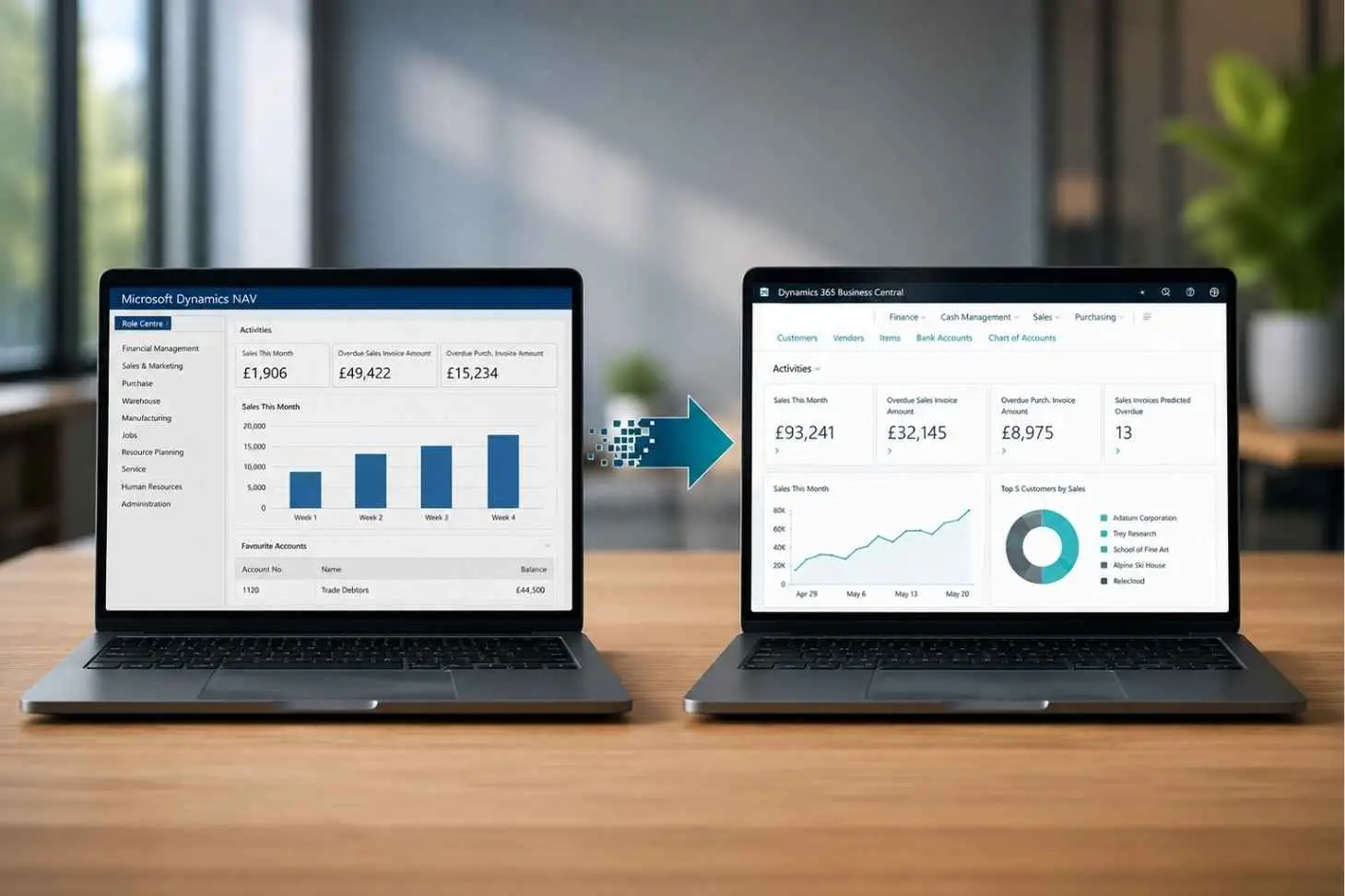
Microsoft Dynamics NAV to Business Central Migration
What Is IAC (Infrastructure-As-Code)?
Ready For More?