Explore why growing businesses become operationally dependent on spreadsheets, the hidden risks of spreadsheet dependency, and why many ERP projects begin with manual reporting, disconnected systems and increasing operational complexity.

Microsoft Dynamics GP to Business Central: Migration or Fresh Start, Which Is Right for You?

The Key Features Your New ERP System Really Should Have
In my experience, no one, at any level of any business, wakes up one morning and decides they need a new ERP system. They certainly don’t do so because they just love new technology. What normally happens is that everyday operations start becoming harder to manage. Reporting takes too long. Month end stretches across multiple spreadsheets and several teams. Data has to be exported, manipulated and checked repeatedly before anyone trusts the numbers in front of them. Processes that worked perfectly well for a smaller business begin struggling under the pressure of growth, increasing complexity and rising operational demands. And somewhere in the middle of all that, Excel becomes business critical. Not because anyone planned for it. No one consciously decided to build operational dependency around spreadsheets. It simply happened gradually as good people created practical workarounds to solve immediate business problems. Finance builds a reporting spreadsheet because the existing system can’t produce the information quickly enough. Operations creates tracking sheets because processes no longer fit the software properly. Leadership asks for better forecasting visibility, so another spreadsheet appears to bridge another gap. Over time, those workarounds stop being temporary. They become dependencies. That’s usually the point organisations begin searching for answers around:
It’s also the point where conversations with people like me tend to start happening. And look, this isn’t because spreadsheets are bad. Microsoft Excel remains one of the most useful tools in business. I regularly speak to organisations turning over tens of millions of pounds each year that still rely heavily on Excel in some areas of the business.
The issue starts when critical operational processes rely on spreadsheets to function at all. At that stage, the conversation stops being about files and formulas. It becomes about scalability, governance, visibility and whether the organisation still has proper control over its own processes.
One of the biggest misconceptions around ERP projects is that they begin with software selection. They don’t. In most cases, the ERP discussion only starts after a business has spent months or even years feeling increasing operational strain. By the time organisations begin speaking to a Microsoft partner like FormusPro, the symptoms are usually already well established. Finance teams are spending too long reconciling information. Reporting packs are becoming increasingly manual. Different departments are working from different versions of the truth. Duplicate processes begin appearing because existing systems no longer reflect how the organisation actually operates. The important thing is that these problems rarely arrive all at once. Businesses adapt to them gradually, which makes them surprisingly easy to normalise internally. Teams build workarounds. Manual checks get introduced. Processes evolve informally around limitations in existing systems. That’s why I often say ERP projects start long before anyone actually mentions ERP. The software conversation is usually the end result of operational friction building over time.
Spreadsheet workarounds nearly always begin as sensible decisions. Someone needs a report quickly. A process doesn’t quite fit the existing system. A team needs better visibility into operations. So somebody creates a spreadsheet and, initially at least, the problem gets solved. But businesses don’t stand still. Teams grow. Processes evolve. Reporting requirements become more demanding. Additional departments start relying on the same information. Before long, the spreadsheet that once supported a small task becomes embedded within a much larger operational process. New tabs get added. More formulas appear. Data starts being pulled in from multiple systems. Other spreadsheets begin depending on it. Eventually, what started as a quick workaround becomes operationally critical. I see this regularly with growing organisations, particularly scale ups and mid-market businesses that have expanded faster than their systems and processes were originally designed to support. The spreadsheet itself is rarely the real issue. The issue is that the business has accidentally built operational dependency around something never intended to act as core infrastructure.
Most organisations can operate successfully with imperfect systems for a surprisingly long time. Good people compensate for process gaps every day. Teams create manual checks and balances. Experienced staff build their own reporting methods and simply “know how things work.” That approach can survive for years. Until complexity catches up. As organisations grow, operational demands naturally increase. Reporting becomes more detailed, compliance expectations rise and approval structures become more layered. At the same time, businesses often introduce additional systems, tools and processes to support growth, each solving individual challenges but collectively creating a more fragmented operational environment. Eventually, manual effort stops helping the business scale and starts restricting it. Teams spend more time maintaining processes than improving them. Reporting cycles slow down. Leadership visibility weakens because information arrives too late or inconsistently. Small operational changes begin creating disproportionate complexity because too many disconnected processes now rely on each other behind the scenes. A factor often overlooked here is the impact this has on staff morale.
Very few people enjoy spending entire days manually consolidating data, validating reports or fixing process issues created by disconnected systems. It leaves less time for strategic thinking, improvement work and genuinely valuable activity. Over time, frustration grows alongside operational inefficiency. That’s usually the point businesses begin recognising they no longer have isolated reporting problems. They have a scalability problem.
There’s an important distinction that often gets lost in conversations like this. Most organisations should absolutely still be using Microsoft Excel. It’s flexible, familiar and incredibly effective for analysis, modelling and solving short-term operational challenges. In many businesses, Excel genuinely helps teams move faster and work smarter. The problems begin when spreadsheets stop supporting processes and start becoming the processes themselves. That’s where dependency appears. Not because anyone deliberately designed things that way, but because operational workarounds gradually became embedded into everyday activity. A reporting spreadsheet evolves into the number leadership relies on during board meetings. Operational planning moves outside the core system because adapting the process properly feels too difficult or time consuming. Over time, critical operational knowledge ends up living inside files rather than systems. And that changes the nature of the risk entirely. The question is no longer whether the spreadsheet works. The real question becomes whether the organisation could still operate effectively without the people currently holding those manual processes together.
Nearly every growing organisation has “that spreadsheet.” The one nobody wants to touch because everyone understands how important it is, but very few people fully understand how it actually works anymore. It may have started as a temporary reporting fix years ago. Since then, formulas have expanded, additional tabs appeared and new operational processes have been layered on top as the business evolved. Different departments now rely on it for different reasons. Data is copied into it from multiple systems, and eventually other spreadsheets begin depending on it too. Before long, entire operational workflows are being held together by something originally created as a quick workaround. That creates a level of fragility many organisations don’t fully recognise until something goes wrong. Sometimes formulas break. Sometimes version control becomes chaotic. Sometimes key employees leave the business and take years of operational knowledge with them. What makes this especially difficult is that spreadsheet dependency often hides behind highly capable people. Strong teams compensate for weak processes constantly. They manually validate information, build checks into workflows and spend hours reconciling reports because they know the systems underneath them can no longer be relied upon completely. From the outside, everything still appears functional. Internally, however, operational strain continues growing.
One of the clearest signs that an organisation has outgrown its operational setup is when discussions about business performance become discussions about whose numbers are correct. Finance has one figure. Operations has another. Sales are working from different reporting entirely. Teams spend more time validating spreadsheets than analysing what the information is actually telling them. The larger the organisation becomes, the more damaging this problem tends to get. Spreadsheet-heavy environments naturally create duplication. Data gets exported from one system, adjusted manually, copied into another report and redistributed across departments. Along the way, calculations evolve independently, assumptions change and confidence in the reporting gradually weakens. Ironically, many organisations assume they have a visibility problem because they need more reporting. In reality, they often already have too much reporting. What they lack is consistency, governance and trust in the underlying data.
That’s typically the point where businesses begin recognising the issue is no longer simple operational inefficiency. It’s decision-making confidence. Because when leadership teams stop trusting the information in front of them, even relatively straightforward decisions become slower, riskier and more dependent on manual validation.
One of the most common things I hear before an ERP project begins is: “Things just feel harder than they used to.” Not broken. Not failing. Just harder. And that’s demoralizing in the worst kind of way. Processes that once felt straightforward now require multiple checks, approvals and manual interventions to complete successfully. Teams spend more time moving information between systems than acting on it. Reporting cycles stretch longer each quarter, and relatively simple operational tasks begin involving far more administration than anyone expected. Importantly, this rarely happens because people are doing a poor job. Usually the opposite is true. The organisation has grown successfully, but the operational foundations underneath it haven’t evolved at the same pace. Systems originally designed for a smaller business are now being asked to support significantly greater complexity, with spreadsheets becoming the glue holding everything together between disconnected processes. At first, good teams adapt remarkably well. Eventually though, the business reaches a point where manual effort is no longer compensating for inefficiency. It’s being consumed by it.
Operational complexity almost never arrives dramatically. It builds gradually through growth, success and changing business requirements. Additional products get introduced, reporting expectations increase and approval structures become more layered. Departments adopt different tools to solve immediate operational challenges, often with good intentions but very little long-term coordination. Individually, many of these changes make complete sense. Collectively though, they reshape how the organisation operates. That’s why businesses often fail to recognise operational drag until it becomes significant. Teams naturally adapt around process gaps. Another spreadsheet gets introduced to bridge a reporting issue. Another approval step appears because confidence in a workflow has weakened slightly. Over time, organisations develop an increasingly large layer of invisible administration sitting around their core operations. And because those processes evolve organically rather than strategically, they often become inconsistent across departments, creating fragmented reporting, duplicated effort and growing difficulty maintaining a single operational view across the business.
There’s a stage many growing organisations eventually reach where scaling no longer feels exciting operationally. It starts feeling exhausting. Every increase in activity creates a disproportionate increase in administrative effort behind the scenes. Finance teams spend longer consolidating reports. Managers rely more heavily on experienced individuals because processes themselves no longer provide enough visibility or consistency. Operational staff introduce additional checks to avoid mistakes created by disconnected systems and manual workflows. What once felt like flexibility begins creating bottlenecks instead. Processes become increasingly dependent on manual knowledge, manual validation and manual intervention. Simple operational tasks take longer because information exists across too many spreadsheets and disconnected systems, each requiring its own interpretation and handling.
That’s usually the point organisations begin recognising they don’t simply have isolated reporting problems. They have an operational model struggling to scale efficiently.
There’s a common assumption that organisations invest in ERP systems because they want new technology. In my experience, that’s rarely the real motivation. What businesses actually want is confidence. Confidence that reporting is accurate. Confidence that departments are working from the same information. Confidence that operational processes can scale without endless manual intervention happening behind the scenes. That’s why ERP conversations tend to happen at very specific moments in a company’s growth journey. Usually after leadership teams have spent enough time dealing with fragmented processes, inconsistent reporting and operational inefficiencies to recognise that the underlying issue is no longer isolated. The business has simply become more complex than its current operating model can comfortably support.
Platforms like Microsoft Dynamics 365 Business Central help organisations reconnect processes that have gradually drifted apart over time. Finance, operations, approvals, forecasting and reporting stop living across disconnected spreadsheets and begin operating within a shared structure that provides greater visibility, consistency and governance. And for many organisations, that’s the real value of ERP. Not replacing Excel. Regaining operational control before complexity starts slowing the business down more than growth is driving it forward.
Spreadsheets aren’t the enemy. Most successful organisations rely on Microsoft Excel in some capacity every single day, and rightly so. It remains one of the most useful tools available for analysis, modelling and short-term operational problem solving. The issue is what happens when those short-term workarounds slowly become permanent operational dependencies. That shift rarely happens because of poor decision-making. More often, it’s simply the natural result of growth. Teams adapt, processes evolve and operational workarounds get layered on top of existing systems because the business needs to keep moving. For a while, that works remarkably well. Until the operational weight behind those processes becomes too difficult to manage comfortably. That’s usually when ERP conversations start becoming serious. Not because organisations suddenly become interested in software projects, but because disconnected systems, spreadsheet dependency and manual operational effort are starting to limit growth, visibility and confidence across the business. And in my experience, that’s the point many organisations begin realising they don’t simply need better spreadsheets. They need a more connected way of operating altogether.

Written By:
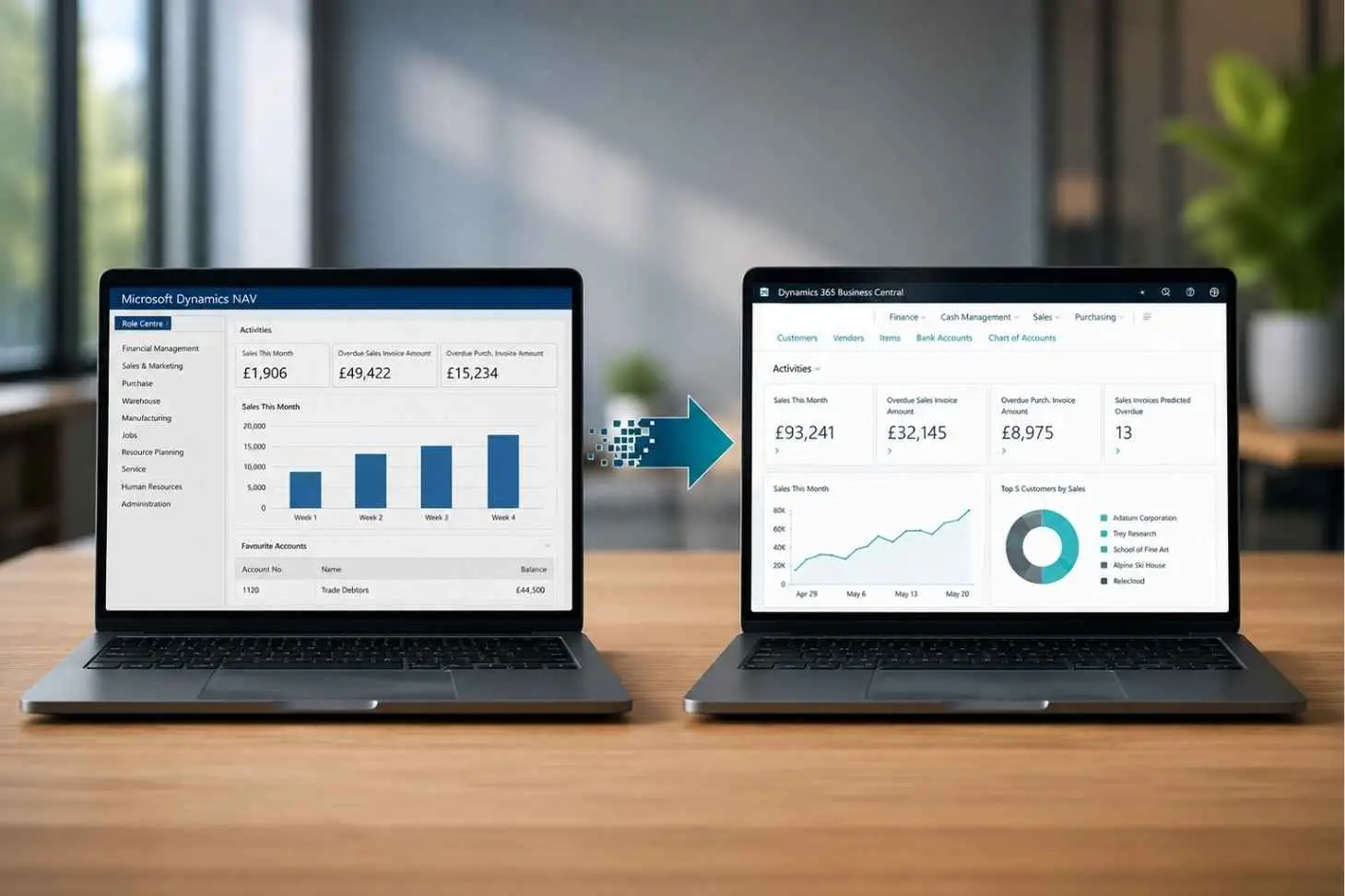
Microsoft Dynamics NAV to Business Central Migration
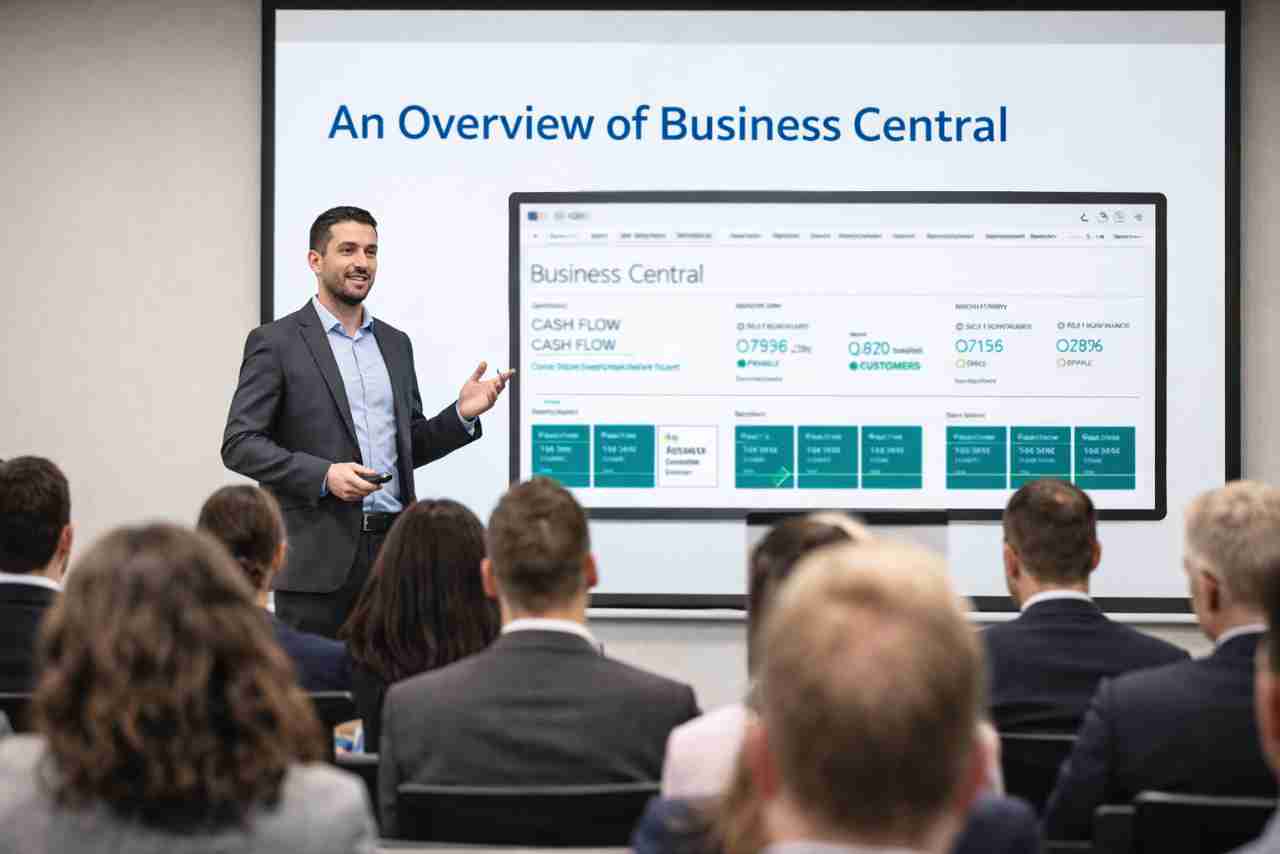
A Quick Overview Of Dynamics 365 Business Central
Ready For More?